




Edison Analysis Agent Recapitulates finding on the Prognostic Potential of KRAS mutations in Pancreatic Adenocarcinoma
Asmamaw (Oz) Wassie, Michaela Hinks
Date:
01.16.2026
Edison’s AI Agents reproduce known scientific findings and make novel discoveries through autonomous and iterative cycles of literature search, hypothesis generation, and data analysis. We recently empowered two of these agents, Kosmos and Analysis, with the ability to autonomously access external databases. Here, we demonstrate how just a single query to the Analysis agent can autonomously identify, access, and analyze data to recapitulate key findings in a recent publication by Varghese et al. You can view the trajectory discussed in this blog post here.
Research Objective
We were inspired by Varghese et al.’s genomic and clinical study on pancreatic adenocarcinoma (PDAC) in a large cohort of patients, and we sought to explore whether the Edison Analysis agent can recapitulate their finding that certain KRAS mutations hold significant prognostic value for patient survival. To do so, we provided the Analysis agent with an objective to identify the correct dataset from a publicly available database, and to carry out specific analyses:
User input:
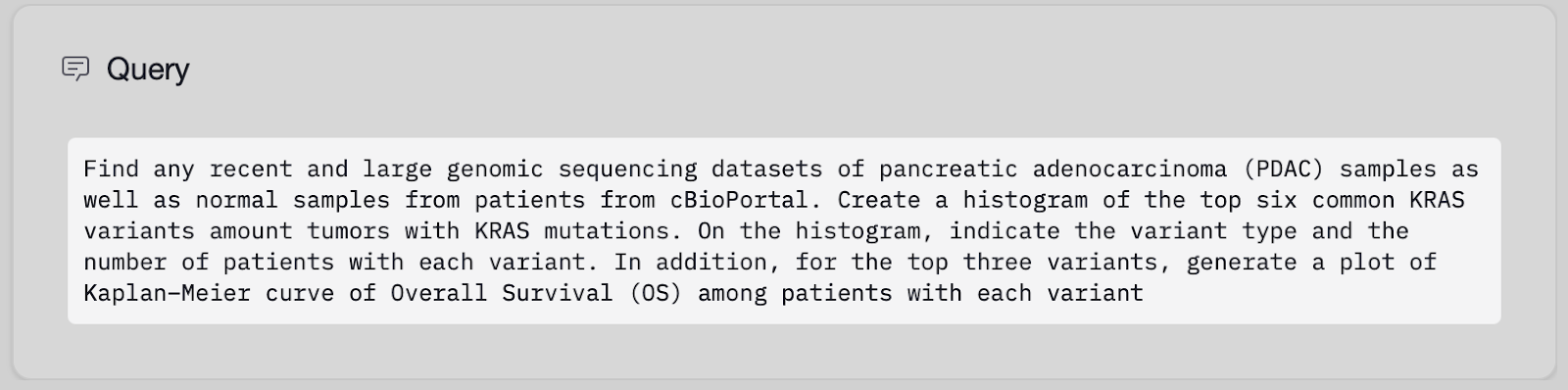
“Find any recent and large genomic sequencing datasets of pancreatic adenocarcinoma (PDAC) samples as well as normal samples from patients from cBioPortal. Create a histogram of the top six common KRAS variants among tumors with KRAS mutations. On the histogram, indicate the variant type and the number of patients with each variant. In addition, for the top three variants, generate a plot of Kaplan–Meier curve of Overall Survival (OS) among patients with each variant”
Edison Analysis Agent Identifies and Retrieves External Dataset
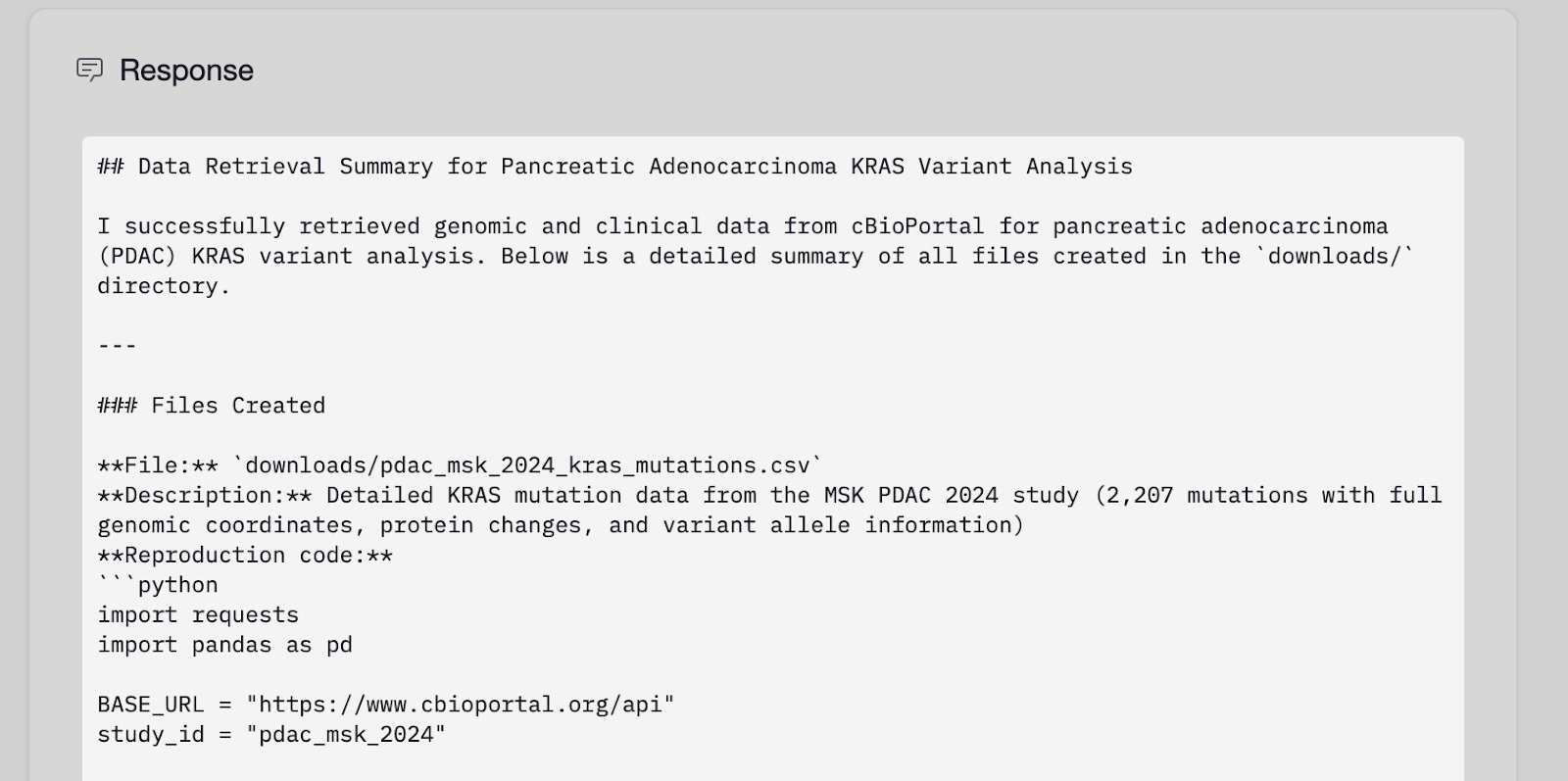
When provided with this research objective, the Analysis agent first explored cBioPortal and correctly identified the appropriate dataset to use.
Edison Analysis Agent Accurately Identifies the most common KRAS mutations and their impact on Patient Survival
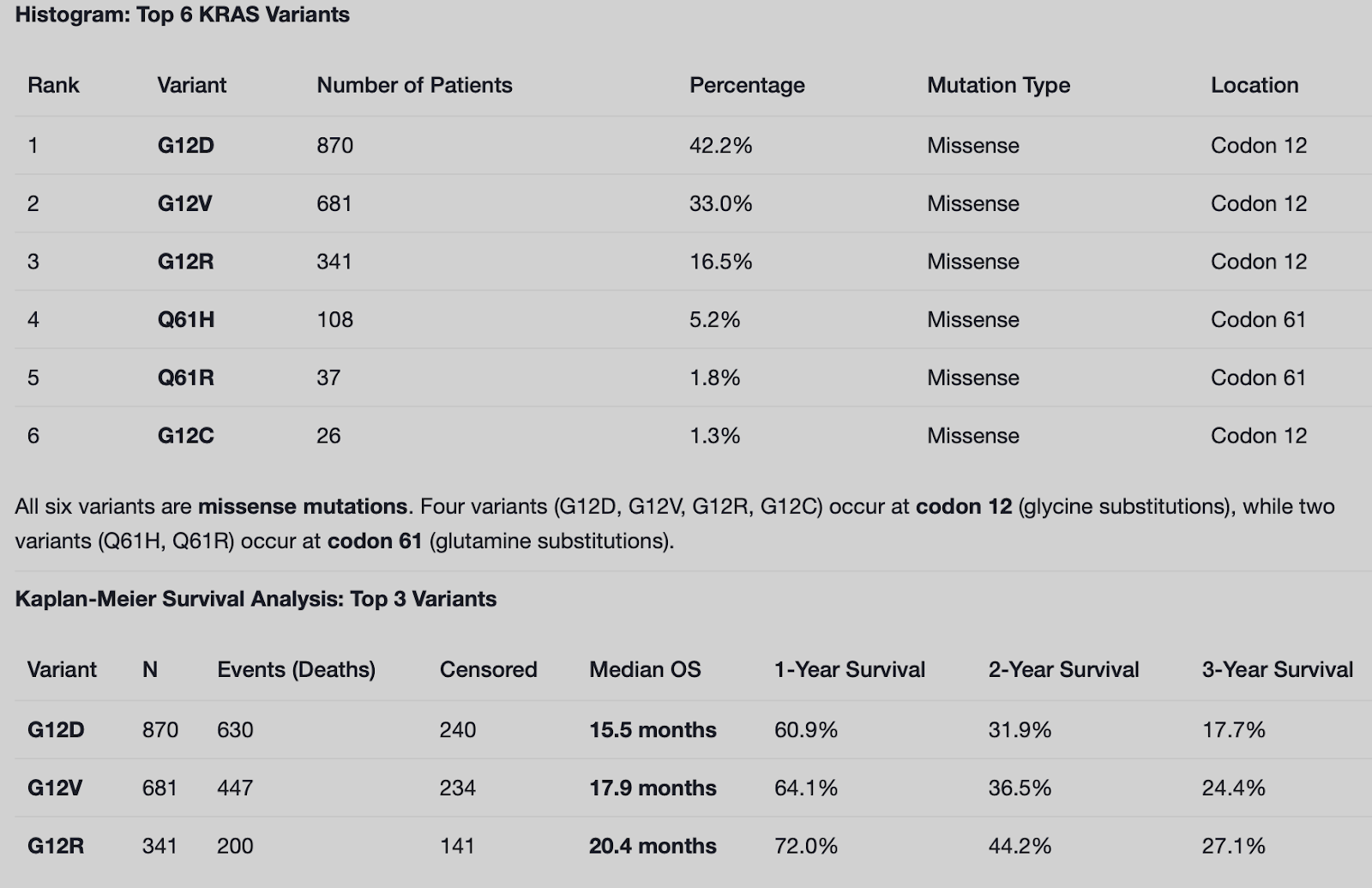
The Analysis agent then continued to access the dataset, identify PDAC patients with KRAS mutations, and rank the prevalence of KRAS variants among these patients. Comparable to the result from the publication (Figure 4A in Varghese et al., shown here in Figure 1A (i)), the agent correctly identified variants in the G12X position (12th codon of KRAS) as being the most common, and it correctly identified the ranking of the prevalence of these variants (Figure 1B (i)). In addition, the agent accurately reproduced the Kaplan-Meier curve of Overall Survival (OS) result from the manuscript (Figure 4B in Varghese et al., shown here in Figure 1A (ii)) by taking patient survival data for patients with KRAS mutations and calculating the OS curve (Figure 1B (ii)).

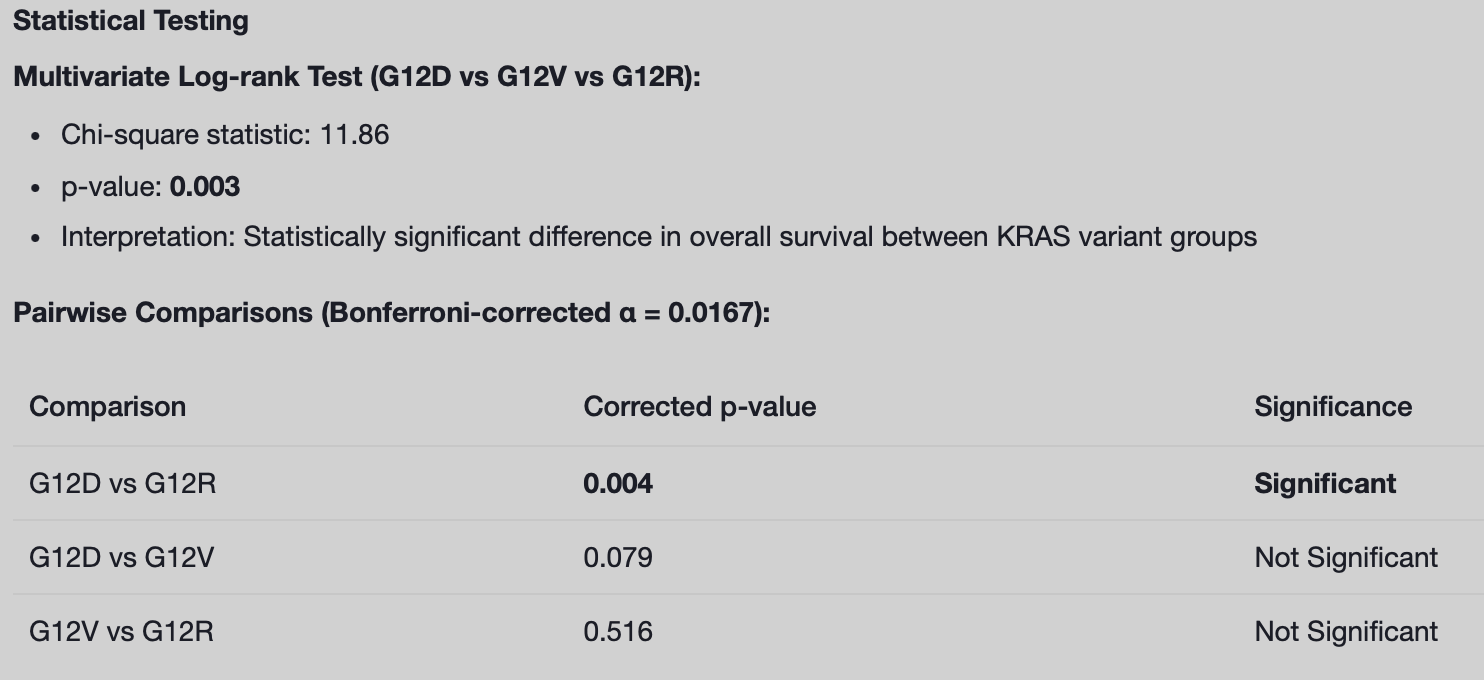
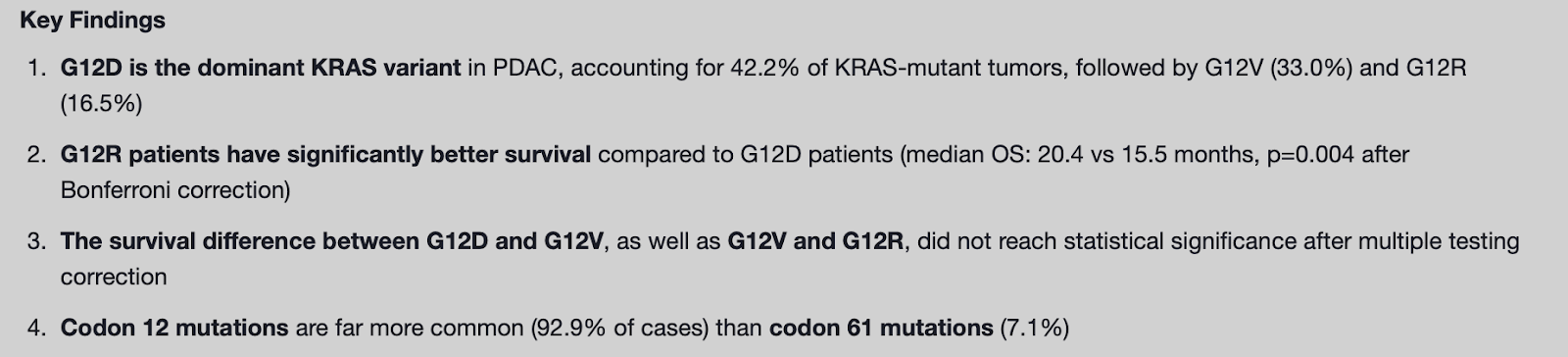
Interestingly, without an explicit instruction presented in the prompt, the Analysis agent performed statistical tests of significance on the KRAS variant patient OS curves, calculating multivariate and pairwise log-rank tests, a common test for significance for survival curves, arriving at the same conclusion as the paper that the only significant difference in survival is between patients carrying the G12D and G12R KRAS variants (Figure 3). While the test applied by the model is different from the one used in the publication (a multivariable Cox proportional hazard model test), the conclusion was still accurate.
Edison Analysis Agent Provides Rich Details and Interpretation of Dataset and Analysis
Beyond carrying out the analyses indicated in its objective, the Analysis agent also provides rich interpretation of the results it produces (Figure 4). For instance, the agent created a summary table providing the key statistics for the overall survival of patients with different KRAS variants (Figure 4). Furthermore, it provided a concise summary of the major findings of the analyses. These types of reports offer further clarity and insight to users and scientists beyond the analyses and figures themselves.
In summary, when provided a brief yet specific research objective, the Edison Analysis Agent accurately reproduced key findings from a recent publication on the prognostic value of KRAS variants to PDAC patient survival by autonomously searching cBioPortal to find the right dataset and conducting the appropriate analyses. While this dataset dealt with genomic and patient data, we aim to further explore the capabilities of Edison AI Agents in carrying out accurate biological and clinical investigations in various contexts.